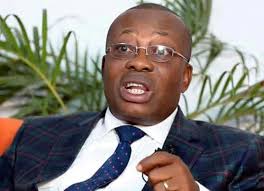
Renowned constitutional lawyer and Senior Advocate of Nigeria, Dr. Monday O. Ubani, has asserted that the Sole Administrator of Rivers State is constitutionally obligated to appear before the House of Representatives Committee overseeing the state’s emergency administration.
His position comes amid ongoing legal and political debate following President Bola Ahmed Tinubu’s declaration of a state of emergency in Rivers State and the subsequent appointment of a Sole Administrator to govern the state.
Speaking on the legality of the House’s oversight function, Dr. Ubani stated that, under Nigerian constitutional law, the Sole Administrator must comply with the summons issued by the Committee. According to him, this obligation is rooted in the principles of legislative oversight, public accountability, and the supremacy of the Constitution.
“There is a presumption of regularity surrounding the President’s proclamation of a state of emergency under Section 305 of the 1999 Constitution (as amended), and by extension, the appointment of a Sole Administrator,” Ubani said. “Unless a competent court declares otherwise, these actions are presumed lawful.”
He added that the National Assembly, having approved the emergency rule, did not provide the executive with a “blank cheque.” As part of its approval, the House of Representatives inserted a clause mandating oversight of the Sole Administrator’s activities.
Dr. Ubani stressed that such oversight is constitutionally valid, citing Sections 88 and 89 of the Constitution, which empower the National Assembly to investigate any public officer or authority responsible for executing public functions or expending public funds.
“The Sole Administrator is managing public resources and making decisions that affect the people of Rivers State. He is, therefore, subject to legislative scrutiny, just like any elected or appointed official,” Ubani emphasized.
He referred to judicial precedent, particularly El-Rufai v. House of Representatives (2003), in which the courts upheld the legislature’s authority to summon public officials for questioning when public interest is at stake.
Dr. Ubani dismissed any suggestion that a presidential proclamation or emergency regulations could override the constitutional powers of the National Assembly. He cited Section 1(3) of the Constitution, which nullifies any law or action inconsistent with its provisions.
“Emergency powers do not excuse unaccountability. On the contrary, they increase the need for transparency. Legislative oversight in such periods ensures democratic integrity is preserved,” he noted.
In conclusion, Dr. Ubani reiterated that Nigeria remains a constitutional democracy, not an executive autocracy. “All public officeholders, including emergency appointees, must remain accountable to the people through their elected representatives. The Sole Administrator must honour the House Committee’s invitation — it is not only a constitutional duty but also a crucial step toward reinforcing democratic norms during political crises.”
Clarification:
Dr. Ubani clarified that his statement is not an endorsement or rejection of the Sole Administrator’s legitimacy. Instead, his analysis focuses solely on the constitutional question of whether the House of Representatives possesses the authority to summon the administrator — a matter he says is clearly answered in the affirmative by constitutional provisions and judicial interpretation.