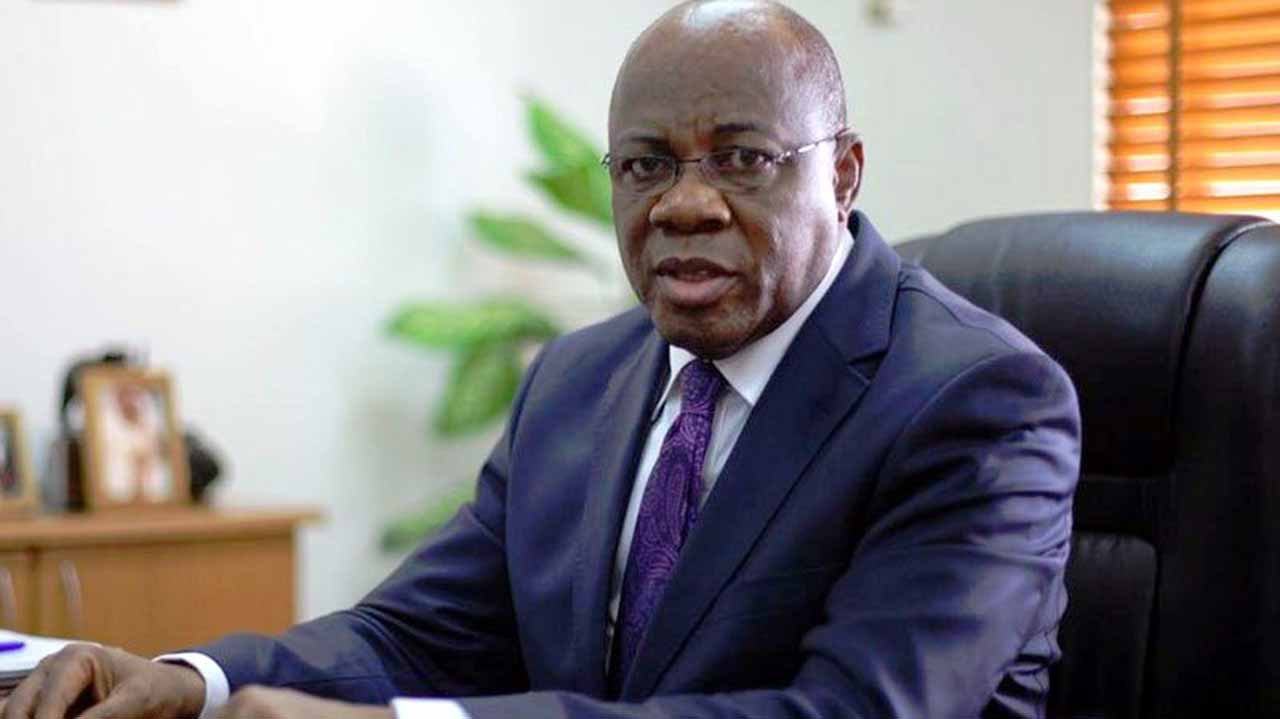
Lagos, June 5, 2025 – As President Bola Tinubu marks two years in office, renowned legal expert and former President of the Nigerian Bar Association, Dr. Olisa Agbakoba (SAN), has called for a paradigm shift in assessing the administration’s performance—urging a focus on political governance reform rather than solely economic indicators.
In a detailed policy statement titled “Two Years Assessment of President Tinubu: The Political Governance Fundamental – Redirecting Nigeria’s Development Agenda Beyond Economics,” Agbakoba warned that economic reforms undertaken by the Tinubu administration, though bold and necessary, risk falling short due to Nigeria’s flawed governance structure.
Governance, Not Economics, is the Root Problem
Dr. Agbakoba criticized the common reliance on inflation rates, GDP figures, and poverty indices as yardsticks for governance performance in Nigeria. According to him, such metrics ignore the structural dysfunction at the heart of Nigeria’s political system.
“Nigeria suffers from a flawed federal system where power is excessively centralized,” he said. “This has created inefficiencies and bottlenecks that even sound economic policies cannot resolve.”
He argued that approximately 90% of Nigeria’s governance framework—including the 36 states and 774 local governments—remains overdependent on the federal government, reducing them to mere collection points for allocations rather than engines of development.
Economic Policy Undermined by Structural Flaws
Citing the agricultural sector as a case in point, Agbakoba noted that despite being Nigeria’s largest employer, agricultural policy is still formulated centrally from Abuja—ignoring local realities and undermining productivity.
“In a country as geographically and economically diverse as Nigeria, one-size-fits-all economic planning from the centre only guarantees suboptimal results,” he said.
He warned that the current model has effectively locked over 200 million Nigerians in the informal sector, depriving them of access to credit, innovation, and formal market participation.
International Comparisons and the Case for Restructuring
Drawing comparisons with decentralized European systems, particularly Spain, Agbakoba observed that true federalism and local autonomy are essential to economic development.
“Nigeria’s over-centralization has stifled growth in vital sectors,” he said, adding that “simple crops like cassava, tomatoes, and rice remain underdeveloped because the governance structures to support them are weak.”
While acknowledging Tinubu’s economic reforms—such as the removal of fuel subsidies and the unification of the foreign exchange market—as bold and overdue, Agbakoba argued that these measures are insufficient on their own.
“These reforms were correct,” he stated, “but they cannot deliver sustainable results within a dysfunctional governance framework.”
A Call for Political and Administrative Restructuring
Agbakoba proposed a three-pronged strategy to address Nigeria’s structural challenges: executive actions, legislative reforms, and administrative restructuring.
He urged President Tinubu to begin devolution of powers through executive orders, transferring key responsibilities—such as agricultural policy, business regulation, and microfinance—to state and local governments.
He also called on the National Assembly to amend the Constitution and redefine legislative roles for each tier of government, empowering local governments to perform critical functions like primary education, healthcare, taxation, and infrastructure maintenance.
“True federalism must give local governments the power to act, not just exist on paper,” he said. “Currently, state governments have usurped their functions, and the federal government has centralized far beyond its capacity.”
From Control to Facilitation
Agbakoba further proposed that federal ministries shift from being implementers to facilitators—focusing on policy formulation and standard-setting while enabling subnational governments to take the lead in execution.
“This would reduce the federal burden while energizing local governance and promoting inclusive growth,” he explained.
Towards a Trillion-Dollar Economy
To meet its trillion-dollar economy target, Nigeria must sustain growth rates of 7–8%—an outcome Agbakoba said is “impossible under the current centralized governance structure.”
He stressed that broad-based growth will only come when local governments and communities are empowered to participate meaningfully in economic activity.
“Restructuring is no longer just a political demand—it is an economic imperative,” he said.
Conclusion: The Time for Change is Now
Concluding his assessment, Dr. Agbakoba asserted that Nigeria’s development dilemma is fundamentally political, not economic.
“For too long, the wrong diagnosis has led to wrong results,” he declared. “It is time for the right treatment—political governance reform is the foundation for sustainable economic transformation.”
As Tinubu’s administration begins the second half of its term, Agbakoba’s message is clear: without restructuring and genuine multilevel governance, even the best economic policies will fail to deliver inclusive growth.