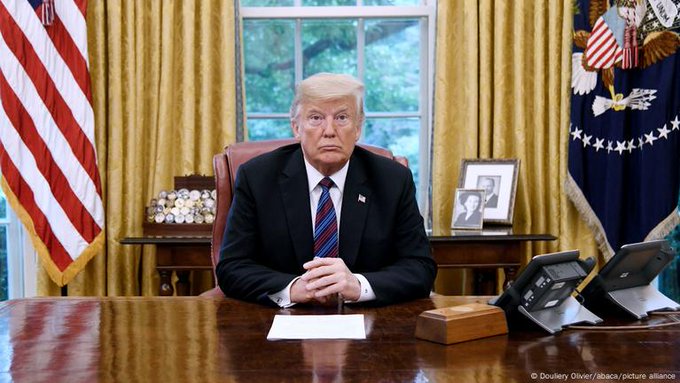
Washington D.C., April 24, 2025 — Former U.S. President Donald Trump has formally petitioned the Supreme Court to allow enforcement of his administration’s controversial order banning transgender individuals from serving in the United States military.
The request, submitted on Thursday by the U.S. Department of Justice, seeks to overturn a nationwide injunction issued by U.S. District Judge Benjamin Settle in Seattle, which currently blocks the policy pending ongoing legal challenges.
According to Reuters, the Justice Department argued that the injunction is incompatible with the significant deference traditionally given to the military’s professional judgments. “The injunction cannot be squared with the substantial deference that the Department of Defense’s professional military judgments are owed,” the Department stated in its filing.
The policy in question, introduced by Trump via executive order in January, claims that transgender identity is inconsistent with the demands and discipline required of military service. “A man’s assertion that he is a woman, and his requirement that others honor this falsehood, is not consistent with the humility and selflessness required of a service member,” the order reads.
The Trump administration’s directive reversed the inclusive policy established under President Joe Biden, which had allowed transgender troops to serve openly.
The Pentagon subsequently issued guidance disqualifying individuals with a history or diagnosis of gender dysphoria or those who had undergone gender transition procedures. However, waivers could be granted on a case-by-case basis for service deemed essential to military readiness.
Gender dysphoria is clinically recognized as the significant emotional distress experienced by individuals whose gender identity differs from their sex assigned at birth.
The Supreme Court had previously addressed Trump’s transgender military ban in 2019, when it permitted the Defense Department to implement a narrower restriction that allowed some service members diagnosed with gender dysphoria after enlistment to remain in the military.
As the case moves forward, it continues to spark national debate over civil rights, military policy, and the broader implications for transgender Americans seeking to serve their country.