
Nigera’s House of Representatives has slammed 31 Ministries, Departments, and Agencies (MDAs) with indictments after the 2019/2020 Auditor-General’s Reports revealed financial discrepancies totaling over ₦103.8 billion and $950,912.05.
Lawmakers ordered the Economic and Financial Crimes Commission (EFCC) and Independent Corrupt Practices Commission (ICPC) to retrieve the mismanaged funds and channel them to the federal treasury.
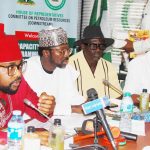
Bamidele Salam moved the motion at plenary, based on Public Accounts Committee (PAC) findings.
Ministry of Foreign Affairs was criticized for unauthorized spending on a presidential lodge project in Ethiopia.
The committee demanded that over ₦124 million and nearly $795,000 be refunded to the federal treasury.
Additional sums, including ₦31.7 million and $155,923.00, were also flagged as illegally expended without appropriation. The Ministry was instructed to recover ₦49.4 million paid for renovation without following procurement procedures, and ₦9.2 million disbursed to embassy officials without proper documentation.
The Bank of Agriculture was under fire for ₦75.6 billion in uncollected debts.
The committee directed the management to publish the list of debtors in at least three national newspapers and called on anti-corruption agencies to recover the outstanding funds. An additional ₦350 million must be recovered and evidence submitted within 90 days.
Nigeria Correctional Service was told to recover unpaid withholding taxes of ₦7.47 million.
Similarly, the Nigeria Export Processing Zones Authority (NEPZA) was directed to retrieve eight official vehicles and ensure the return of four operational vehicles unlawfully retained by the Ministry of Industry, Trade, and Investment.
NEPZA was also cited for procurement violations totaling over ₦12 million, with sanctions recommended against the accounting officer responsible.
Kwali Area Council in the Federal Capital Territory was flagged for payments totaling ₦82 million made to 105 unidentified beneficiaries.
The former Council Chairman was tasked with recovering and remitting the funds to the treasury and providing supporting evidence to the committee.
The Nigeria Customs Service was instructed to work with the Accountant-General of the Federation to produce a detailed list of all items credited to both the Federation and Non-Federation Accounts to ensure transparent accounting.
At the Rural Electrification Agency, financial infractions totaling over ₦1.3 billion were uncovered.
The former Managing Director was ordered to refund ₦394 million expended on electrification projects not approved by the agency’s Tender Board.
Additional sums, including ₦4.2 million spent on unauthorized publicity and ₦969 million transferred to the Eurobond ledger without authorization, were also flagged, with disciplinary measures recommended for responsible officers.
The Veterinary Council of Nigeria cited for unremitted stamp duties and internally generated revenue.
The Council must recover ₦1.1 million in stamp duties from contractors and remit over ₦19 million in outstanding funds, including unremitted IGR and excess payments, to the Federal Inland Revenue Service and Consolidated Revenue Fund.
Other indicted MDAs are National Film and Video Censor Board,
Nigerian Communication Satellite Limited (NCSL) Abuja,
National Centre for Energy Efficiency and Conservation (NCEEC), Lagos,
The Nigerian Security Printing and Minting Plc, Ministry of Petroleum Resources amongst others
The Deputy Speaker of the House, Benjamin Kalu presiding over the sitting, alongside other lawmakers, commended Bamidele Salam and the Committee members for their meticulous and rigorous efforts in producing a comprehensive and impactful report.
Kalu stated, “You are one of our best,” recognising the committee’s dedication to accountability and transparency.
In his earlier remarks, Bamidele Salam emphasized the need for timely adoption of the report’s recommendations, noting Nigeria’s lagging position in comparison to other African countries within WAAPAC and AFROPAC frameworks.
He observed that while countries like Kenya are currently reviewing the Auditor-General’s Report for 2023/2024, Nigeria is still addressing issues from the 2019/2020 report, which falls short of expectations.
“We need to adopt the Public Accounts Committee consideration without delay,” Salam urged.