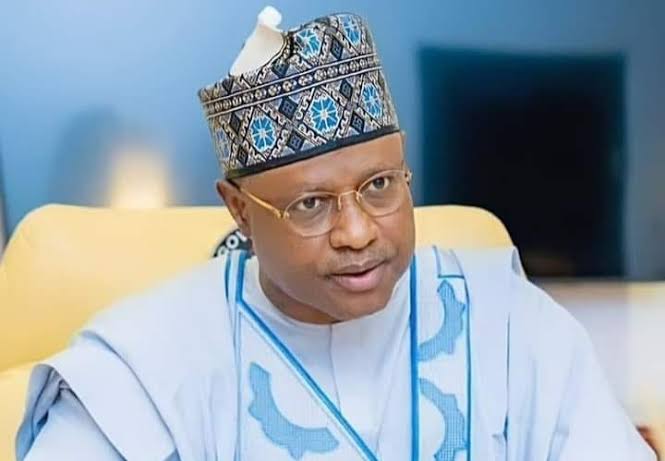
The Governor of Kaduna State, Uba Sani, has called for a complete overhaul of the nation’s Constitution to ensure it empowers the people.
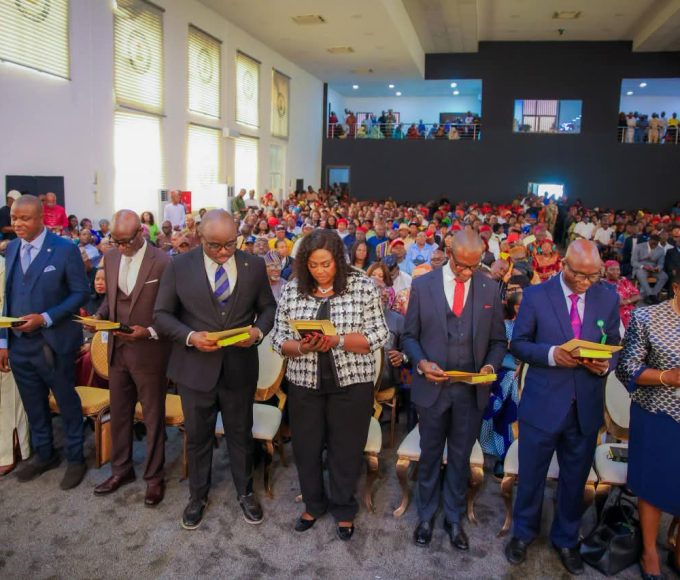
The Governor, who was represented by his Deputy, Hadiza Balarabe, at the Northwest public hearing on constitution review in a gathering of lawmakers, traditional rulers, youth groups, women leaders, and other Nigerians, described the Constitution as a “living compact” that must evolve with the people it seeks to govern.
He called the hearing “a moment of national reckoning” and challenged delegates to “legislate with conscience” and “rise above partisan interests.”
“The Constitution must cease to be a document of convenience for the powerful and become a charter of empowerment for the people,” he declared to thunderous applause.
Governor Sani, who is a former senator and key voice on constitutional reform, laid out a sweeping reform agenda spanning state policing, true federalism, institutional independence, economic decentralization, gender inclusion, and constitutional recognition of traditional institutions.
On State Policing, he said security cannot be national if it is not local, reaffirming his long-standing advocacy for state police, which he previously backed through multiple Senate bills. “Decentralized policing is not only desirable but inevitable.”
On Fiscal Federalism, he opined that “Overcentralisation has stifled innovation, discouraged local problem-solving, and alienated citizens.”
He urged a constitutional realignment to allow states greater control over their resources.
On Women’s Inclusion, he described gender imbalance in political representation as a national failing, stating bluntly that a nation that sidelines its women sidelines its progress.
On Traditional Institutions, Sani called for constitutional recognition of traditional rulers as vital agents of local governance and peacebuilding, asserting that “no serious constitutional review can ignore the stabilizing power of these institutions.”
Also speaking on Institutional Autonomy, the Governor argued for constitutional safeguards to protect democratic institutions from political interference, urging the entrenchment of genuine separation of powers.
Therefore, he criticized the 1999 Constitution’s military origins, calling it a flawed legacy that no longer reflects the aspirations of the Nigerian people.
“This is not just a technical review; it is an act of political courage and moral imagination,” he told the gathering. “Let us move from sentiment to structure.”
While appealing for national unity and vision, he added that “May we be counted among those who chose to build, not to postpone; to reform, not to retreat.”
As the Constitution Review Committee continues its nationwide consultations, the message from Kaduna was clear: the time for transformative constitutional change is now and the people must be at the center of it.
Earlier in his opening speech, Chairman of the North West Subcommittee on Constitution Review, Kaduna Centre A, Aliyu Madaki, declared the ongoing constitutional review process as “a task of national rebirth,” vowing that no voice would be ignored and no idea dismissed.
Speaking on behalf of the Speaker of the House of Representatives,Tajudeen Abbas, the Deputy Speaker and Constitution Review Committee Chairman, Benjamin Kalu, and the entire 10th House of Representatives, the Chairman described the hearing as a defining moment in Nigeria’s democratic evolution.
Madaki said, “This is more than a legislative duty. It is a national responsibility that will shape the future of our country and the lives of generations yet unborn.”
The Chairman emphasized the House’s commitment to a participatory and transparent process, noting that the Constitution must evolve to reflect the realities and aspirations of modern Nigerians.
“A constitution that remains static risks becoming detached from the people’s reality. We must ensure our supreme law speaks to present-day challenges while offering durable solutions for tomorrow,” he said.
He made clear that the subcommittee’s mission is not to impose elite preferences but to genuinely listen to Nigerians across all regions, identities, and classes.
The Chairman revealed that the review process is considering 86 bills under 13 thematic areas, including: Electoral and Judicial Reforms, Legislature and Inclusive Governance, Security and State Policing, Devolution of Power, Strengthening Institutions, Traditional Institutions, Fiscal Reforms, Citizenship and Indigeneship, Fundamental Human Rights, Local Government Autonomy, State and Local Government Creation.
“This isn’t about editing text. It’s about refining the tools of nation-building,” he declared.
He acknowledged the frustrations and long-standing demands of citizens on pivotal national issues from true federalism and restructuring, to gender equity, youth inclusion, state creation, and resource control.
“Let me assure you: no voice will be too small, no idea too radical, and no region too remote to be heard in this process,”
he affirmed.
He passionately urged all participants and stakeholders to approach the task not with narrow interests but with a vision that places national interest above politics.