By Prof. Chiwuike Uba, Ph.D., Development Economist and Founder, Amaka Chiwuike-Uba Foundation (ACUF)
In July 2016, I lost my wife, Amaka, to a preventable asthma crisis. Her untimely death devastated my world and gave rise to a mission: ensuring that no other family endures the pain of losing a loved one to a manageable condition. That mission became the foundation of the Amaka Chiwuike-Uba Foundation (ACUF), which I established in her memory to support individuals living with asthma and advocate for transformative policies in Nigeria and Africa.
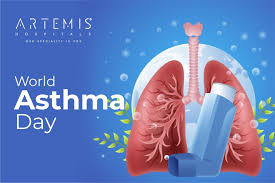
This year’s World Asthma Day, themed “Make Inhaled Treatments Accessible for ALL,” is not just a slogan—it is a moral and national imperative. The Global Initiative for Asthma (GINA) has rightly focused on access, because breathing should never be a luxury reserved for the wealthy or urban elite. Inhaled corticosteroids, essential for managing asthma effectively, must be made available, accessible, and affordable for everyone.
The Growing Burden of Asthma in Nigeria
Asthma is on the rise in Nigeria, with a prevalence rate ranging between 5.12% and 14.7%, and forecasts suggesting a further increase by 2025. Across Africa, the burden is even more widespread—some populations show asthma prevalence as high as 53%. Urbanization, poor air quality, and environmental degradation are driving these increases.
The World Health Organization (WHO) estimates over 250,000 asthma-related deaths annually, with over 80% occurring in low- and middle-income countries. In Nigeria, asthma accounts for 5–10% of emergency room visits and contributes significantly to child and young adult morbidity. Some tertiary hospitals report asthma mortality rates as high as 6% among admitted patients.
Behind these statistics are real people—children missing school due to recurrent attacks, families choosing between food and medication, and elders in rural areas unable to access basic treatment. Their struggles are largely invisible, yet they reflect the everyday reality of millions of Nigerians.
The High Cost of Staying Alive
The economic burden of asthma is unbearable for many Nigerians. A short-acting beta-agonist (SABA) inhaler, such as salbutamol, costs between ₦5,000 and ₦8,500. Inhaled corticosteroids (ICS) like budesonide or beclomethasone are often priced beyond the reach of average Nigerians. Combination inhalers containing ICS and long-acting beta-agonists (LABA), essential for moderate to severe cases, can cost between ₦34,500 and ₦70,000.
To put this in perspective, Nigeria’s new minimum wage is ₦70,000 per month—which barely covers the cost of a single inhaler. Expecting anyone to spend their entire salary on one medication is not just unjust; it is inhumane.
The exit of major pharmaceutical companies like GSK, currency depreciation, and a dependence on imported medications have worsened the situation. Inflation and weak competition have driven up prices, and the result is predictable: patients skipping medication, delayed treatment, deteriorating health, and preventable deaths.
A Broken Healthcare System
Nigeria’s healthcare infrastructure cannot meet the needs of its growing asthma population. Of the 40,400 health facilities nationwide, 85% are classified as Primary Health Care (PHC) centers, yet over 80% of these are non-functional. Only 12% of doctors work in these centers, while 74% practice in private facilities, which make up just 27% of all hospitals. This stark imbalance leaves rural and poor populations at the greatest disadvantage.
Most PHCs lack essential equipment, medications, and trained personnel. The national Essential Medicines List (EML) still includes outdated and potentially harmful drugs such as oral salbutamol and corticosteroids, contrary to WHO recommendations. These drugs are known to cause adverse side effects like tremors and cardiac arrhythmias and are linked to increased asthma mortality.
Worse still, Nigeria lacks a national asthma treatment guideline. Without standard protocols, healthcare workers are left to rely on inconsistent and often outdated practices. This contributes to poor disease control, inconsistent care, and deepening health inequalities.
Environmental Triggers and Air Pollution
Nigeria has some of the worst air pollution levels in the world, especially in cities like Lagos, Port Harcourt, and Kano. Airborne toxins from vehicle emissions, biomass fuel, and industrial waste—particularly gas flaring in the Niger Delta—contribute significantly to respiratory diseases. These pollutants increase asthma attacks and even trigger the onset of asthma in previously healthy individuals.
Without decisive action on environmental health—such as banning gas flaring and adopting cleaner energy—any effort to improve asthma outcomes will be undermined.
Policy and Budgetary Failures
Nigeria continues to fall short of its Abuja Declaration commitment to allocate 15% of the national budget to health. In 2025, just ₦2.48 trillion—or 5.2%—was allocated to the health sector, well below both the Abuja target and WHO recommendations.
Meanwhile, out-of-pocket health expenditures remain high, at 76.6% of total healthcare spending. Less than 3% of Nigerians are covered by the National Health Insurance Scheme (NHIS), now the National Health Insurance Authority (NHIA). With such limited financial protection, families are left vulnerable, often forced into poverty by health-related costs.
A Call to Action: What Nigeria Must Do
To turn the tide, Nigeria must implement bold, evidence-based reforms:
-
Update the Essential Medicines List to remove outdated asthma drugs and include ICS and combination inhalers.
-
Subsidize asthma medications and include them in the NHIA benefit package.
-
Develop and implement national asthma treatment guidelines aligned with global best practices.
-
Invest in revitalizing PHC centers, with adequate staffing, diagnostics, and medication supply.
-
Promote local production of asthma medicines through tax incentives, regulatory reforms, and public-private partnerships.
-
Strengthen environmental regulations to combat air pollution and end gas flaring.
-
Increase public health spending to meet the 15% Abuja Declaration target and expand health insurance coverage.
No One Should Die Because They Cannot Afford to Breathe
The loss of my wife, Amaka, was a personal tragedy—but it has become a public mission. Through ACUF, we will continue to advocate for asthma care that is accessible, affordable, and effective.
On this World Asthma Day 2025, I call on the Nigerian government, civil society, legislators, corporations, and individuals to rise to the challenge. Asthma does not discriminate—and ironically, we only seem to learn that some of our politicians suffer from asthma when they are arrested. Let them lend their voices now—not from compulsion, but from compassion.
Access to air should not be a privilege. It is a right.
The time to act—for the air we breathe, the health we deserve, and the lives we can still save—is now.
God is with us.
Prof. Chiwuike Uba, Ph.D., CPA, FCMA
PFM | Public Policy Analysis & Governance | Organisational Development
📞 +234 803 309 5266
📧 Skype: chiwuike