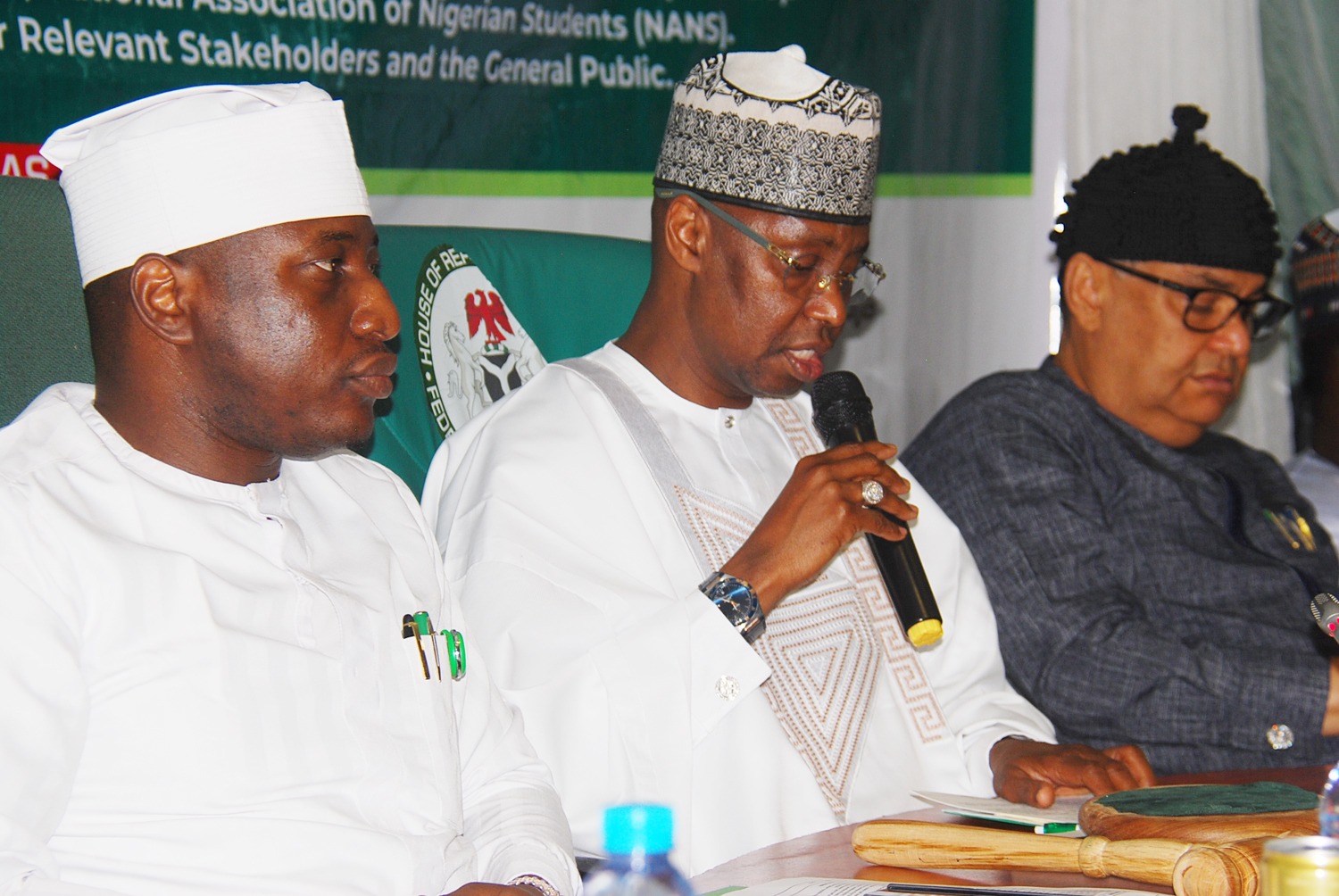
The House of Representatives on has launched an investigation into alleged fund diversions, non-compliance, and unethical practices in the disbursement of the student loan scheme, warning that such issues could derail one of the country’s most significant education interventions.
Speaking at the opening of a public hearing on the matter, Speaker of the House, Tajudeen Abbas, said the legislature would not allow the student loan programme to be compromised by administrative lapses, regulatory weaknesses, or deliberate abuse of process.
“The credibility of the programme and the trust of the Nigerian people in public institutions are at stake,” Abbas said. “We cannot fold our arms and allow this to be swept under the carpet.”
The hearing, jointly conducted by the House Committee on Students Loans, seeks to investigate reports of delayed disbursements, lack of transparency, and possible collusion among key stakeholders.
Abbas described the probe as both a constitutional obligation and a moral responsibility to protect young Nigerians whose educational future depends on the integrity of the scheme.
Quoting Sections 88 and 89 of the 1999 Constitution (as amended), the Speaker said the House was empowered to investigate the conduct of any authority or agency responsible for implementing laws enacted by the National Assembly.
He emphasized that the investigation is not a witch-hunt but a deliberate effort to identify weaknesses, correct procedural flaws, and ensure accountability in the management of public funds.
“The goal of this House is not to witch-hunt anyone,” he said, “but to ensure that every kobo allocated to support Nigerian students is used judiciously and transparently.”
Abbas described the Nigerian Education Loan Fund (NELFUND), established through the Student Loans (Access to Higher Education) Act, 2024, as one of the flagship initiatives of President Bola Ahmed Tinubu’s Renewed Hope Agenda. He noted that the programme has already processed over 600,000 applications and disbursed more than ₦73 billion to students across the country.
However, he warned that emerging reports of mismanagement threaten to derail what should be a transformative national intervention.
“This hearing is structured to verify the allegations, identify institutional or administrative flaws, and recommend appropriate corrective measures, including sanctions where necessary,” he said.
Chairman of the Committee, Ifeoluwa Ehindero, said the student loan initiative has rekindled hope for thousands of Nigerian families, with tangible results already being recorded.
As of June 30, 2025, Ehindero said ₦73.1 billion had been disbursed to 366,247 student beneficiaries across federal and state tertiary institutions. Of this amount, ₦38.26 billion was allocated for tuition fees and ₦34.85 billion for upkeep allowances, covering over 206 institutions.
He credited Speaker Abbas for his leadership and commitment to transparency, which enabled the Joint Committee to create an impartial platform for accountability and reform.
“We are not out to witch-hunt anyone,” Ehindero said. “Our objective is to ensure prudent accountability, improve the disbursement process, and add value to all stakeholders.”
In his submission, Akintunde Sawyer, Managing Director of NELFUND, said the Fund has received over 650,000 registrations and processes about 2,000 applications daily. He explained that all applications go through a verification process, and funds for successful applicants are paid directly to their respective institutions.
The House Committees are expected to hold further sessions to hear from key institutions, regulators, and affected students as they work toward restoring public confidence in the programme.