INEC Counters Social Media Claims, Insist “No PVC, No Voting,” Warns Against “Rig and Die” Slogan
The Independent National Electoral Commission (INEC) has described as false claims circulating on social media that Nigerians will be able to vote in the 2027 General Election without their Permanent Voter Cards (PVCs), warning that such misinformation could disenfranchise citizens and fuel tension on election day.
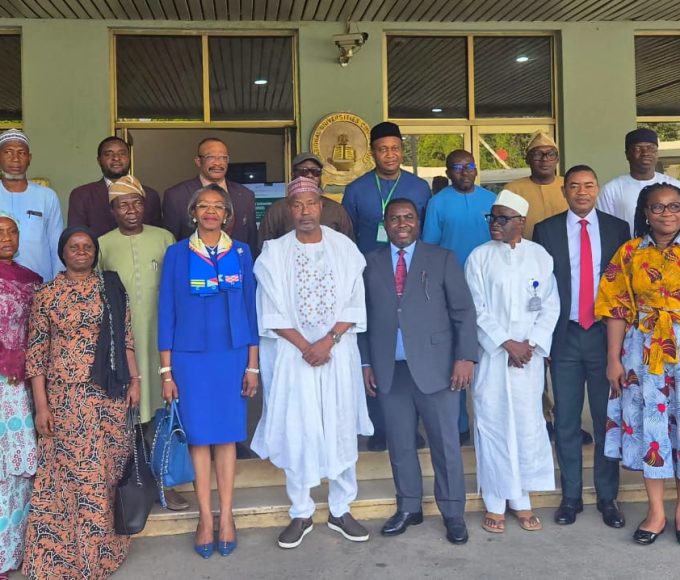
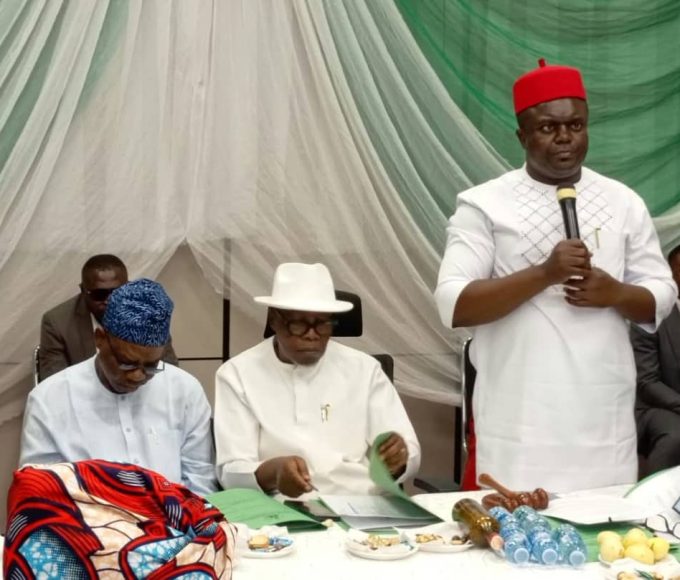
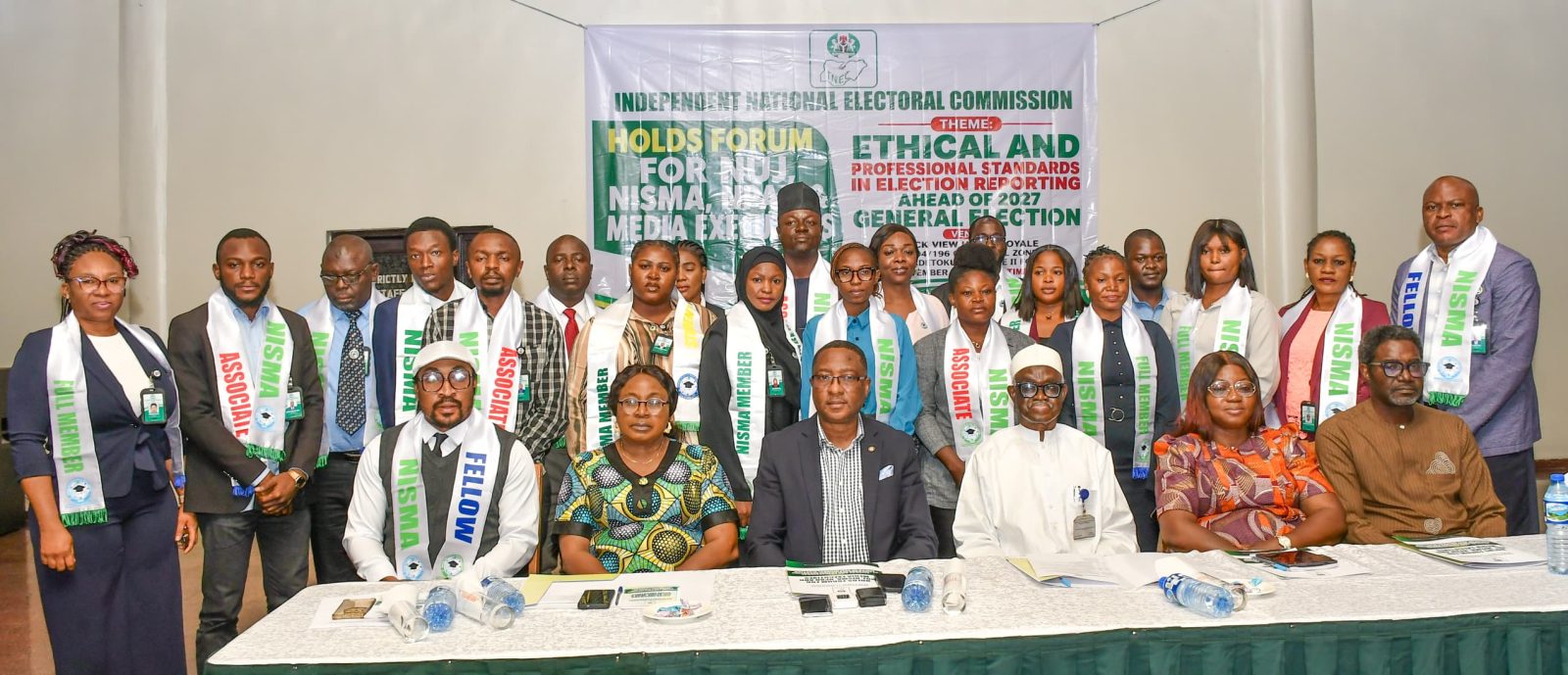
The National Commissioner and Chairman, Information and Voter Education Committee (IVEC), Mohammed Haruna, made the statement in Abuja at the INEC Forum for the Nigeria Union of Journalists (NUJ), the Nigerian Institute of Social Media Analysts (NISMA), the Newspaper Proprietors Association of Nigeria (NPAN) and media executives on “Ethical and Professional Standards in Election Reporting Ahead of 2027 General Election.”
Represented by the Deputy Director, Information and Publicity, Wilfred Ifogah, the National Commissioner said the claims, which he noted were gathering pace on X, were coming largely from anonymous or unverifiable accounts.
“Whatever the version, whether that the BVAS has made the card unnecessary or that a name on the register will suffice, the message is the same: that the card has become a formality. It is false,” he said.
He explained that Section 47(1) of the Electoral Act 2026 requires every person intending to vote to present a valid PVC for accreditation at the polling unit where he or she is registered.
According to him, the Bimodal Voter Accreditation System (BVAS) verifies the card and the biometrics of the person presenting it.
“It confirms the voter; it does not replace the card. No PVC, no accreditation; no accreditation, no ballot paper,” he said.
The National Commissioner warned that a citizen who believes the falsehood may never collect his or her card, or may set out on election day without it and be turned away.
He said that, multiplied across thousands of polling units, such disenfranchisement would result in anger, long queues, confrontation and suspicion, and a ready-made grievance for anyone who wished to discredit the outcome. He urged voters to collect their cards without delay and to ask INEC whenever in doubt.
Haruna also expressed concern over what he described as a worrying rise in negative and threatening rhetoric as the election draws near, including abusive exchanges between supporters of rival candidates, open threats against opponents and sweeping attacks on the integrity of institutions, including the Commission and its staff.
“All of it carries a cost, because language that casts fellow citizens and electoral officials as enemies to be defeated, rather than compatriots to be persuaded, prepares the ground for violence,” he said.
Specifically, he condemned the growing use of the phrase “rig and die.”
“Whatever its originators intend, and some insist it is aimed only at those who rig, a slogan that links an electoral offence to death is dangerous,” he said.
He noted that the people most exposed at polling units were not powerful politicians but ordinary Nigerians serving as presiding officers, assistant presiding officers, collation officers and other ad hoc staff, as well as voters, party agents and observers.
“A charged crowd can easily mistake a delayed result, a technical difficulty or a rumour for rigging, and a mistake of that kind can never be undone,” he said.
He stated that rigging is a crime for which the Electoral Act 2026 prescribes penalties, and that the remedy lies in the law, through vigilant observation, transparent results on the INEC Result Viewing (IReV) portal, formal complaints to the Commission and the security agencies and, where necessary, the courts.
“The right to life is guaranteed by Section 33 of the Constitution, and no one may take it on suspicion,” he said.
The National Commissioner appealed to political leaders and their supporters to retire such language, and urged the media not to amplify it as a headline, hashtag or trending topic.
He urged the media to report such rhetoric, where it is news, with its context, the legal position and the safety of electoral officials in view.
Speaking on the role of the press, Haruna said public confidence in elections rested heavily on what journalists report.
“Most citizens will never see a polling unit being set up, a BVAS device at work or a result sheet being signed. They will know these things only through what you tell them. Public confidence in our elections therefore rests, to a remarkable degree, on the credibility of your reporting,” he said.
He said ethical reporting was a duty owed to citizens. “Ethical election reporting is not a favour to INEC; it is a service to the public,” he said.
He listed verification before publication, labelling projections and unofficial tallies for what they are, separating news from political advertising, giving fair space to all candidates and parties, avoiding hate speech, and correcting errors promptly and prominently as standards already enshrined in the journalists’ own Code of Ethics.
He reminded the media that results are declared only by the Commission through its duly appointed Returning Officers, and urged reporters to attribute their sources, to distinguish clearly between what they have seen and what they have been told, and to ensure that they neither obstruct election officials nor compromise the secrecy of the ballot.
On disinformation, the National Commissioner asked journalists to treat “every viral post, screenshot, audio clip and video as a lead to be checked, not a story to be run,” and to check any claim about INEC with the Commission before it goes out.
He reminded participants that creating or circulating fake accounts, doctored images, cloned voices and AI-generated content is an offence under the Cybercrimes Act, and asked media platforms, particularly those of NISMA, to be “the place where a lie meets the truth and loses.”
Citing recent off-cycle elections, he recalled that vote buying was the most troubling feature of the Ekiti election in June, where fewer than four in every ten registered voters turned out.
He added that in the Osun election in August, false claims of ghost and hired voters, together with AI-generated content, circulated on social media while collation was ongoing, forcing the Commission to spend valuable time countering them. He noted, however, that independent observers found the declared results consistent with the tallies from the polling units.
“The lesson is plain: where accurate information travels as fast as falsehood, public trust is protected,” he said.
He also said coverage of the elections must reflect the full electorate.
“Women, young people and persons with disabilities are too often absent from election stories, except as statistics,” he said.
The National Commissioner said the Electoral Act 2026 had given the Commission new tools and responsibilities, including making the use of BVAS compulsory for voter accreditation and requiring the upload of pictures of polling unit results to the IReV portal.
He urged participants to ask searching questions during the presentations on these innovations, the key provisions of the Act and voting procedures.
“We would rather you ask us now than speculate later, because the better you understand our processes, the more accurately you can explain them to the public,” he said.
He announced that INEC will on Saturday, 28 November, conduct a nationwide mock accreditation and voting exercise across all 36 states and the Federal Capital Territory, in two polling units per Registration Area.
According to him, polling units will open by 8:30 a.m., with accreditation running from 8:30 a.m. to 2:30 p.m. The exercise will simulate the Presidential election and test the BVAS and the upload of results to the IReV portal.
“It is a test, not an election, and no winners or losers will be declared. Its value lies in finding faults while there is still time to fix them, so a fault recorded on Saturday is the exercise doing its job,” he said.
He asked the media to report it as a test, and appealed to voters in the selected polling units to come out with their PVCs and take part.
Haruna said the Commission also holds itself to account, stating that any staff or ad hoc official who compromises an election would face the full weight of the law. He added that the Act provides penalties for result manipulation, vote buying and the frustration of the upload of polling unit results to the IReV.
In her remarks on the objectives of the forum, the Director, Voter Education and Publicity (VEP), Victoria Eta-Messi, said the forum was part of the Commission’s effort to build a working partnership with the media ahead of the 2027 General Election.
In her welcome remarks, the Resident Electoral Commissioner for the FCT, Hale Longpet, represented by the Administrative Secretary, Bimbo Oladunjoye, described the media as an indispensable partner in the delivery of credible elections.
Delivering a goodwill message, the NUJ President, Yahaya Alhassan, represented by the Zonal Vice President, Zone D, Adeiza Jimoh, commended INEC for the engagement and said the media remained a critical pillar of democracy.
The National Coordinator of NISMA, Christian Eze, said social media users were part of the electoral information ecosystem and bore responsibility for the integrity of the 2027 General Election.