
World Food Day: Stakeholders Warn Nigeria Against Dependence on Foreign Seeds
Stakeholders in the agricultural sector, have warned that Nigeria’s growing dependence on foreign seeds could undermine the country’s food sovereignty, calling for increased investment in local seed production, organic farming and household food cultivation.
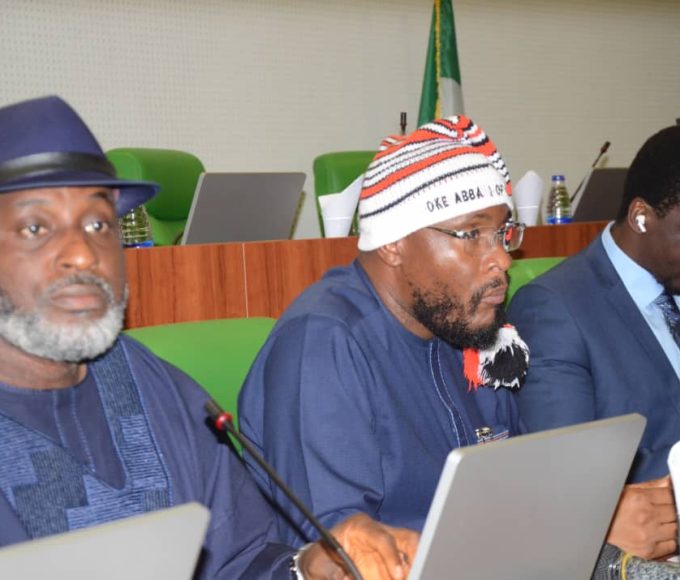
They made the call during a World Food Day media briefing at the National Assembly Complex, Abuja, where they urged Nigerians to take greater responsibility for food production through the Let’s Go Planting initiative.
The event was organised by the Centre for Food Safety and Agricultural Research (CEFSAR), in conjunction with the Loveworld Ministry of Food Technology and Sovereignty.
Speaking at the event, the Executive Director of CAfPRA and Deputy Director of CEFSAR, Segun Adebayo, warned that a country could have food available for consumption but still lack food sovereignty if it depended heavily on external suppliers for the seeds required to sustain agricultural production.
Adebayo said excessive reliance on imported seeds, particularly varieties that could not be replanted after harvest, posed potential risks to Nigeria’s long-term food security, especially in the event of disruptions to international supply chains.
He advocated greater investment in locally produced, regenerative seeds that farmers could preserve and replant, stressing that the ability to control seed production was fundamental to building a resilient and self-sustaining food system.
“Everybody must eat. Food is not discriminatory. But we have to be very careful about what we eat because what we eat matters a great deal,” he said.
The CEFSAR deputy director urged Nigerians to embrace household food production by cultivating vegetables, fruits and other food crops in their backyards, gardens, schools and other available spaces.
According to him, food production should not be regarded as the exclusive responsibility of commercial farmers, as individuals, families, schools and communities could contribute to reducing hunger and improving access to nutritious food.
“Let’s Go Planting is not just a slogan; it is a call to action,” Adebayo said, urging Nigerians to translate discussions about food security into practical efforts to grow their own food.
Also speaking, the Director of the Department of Agriculture at the Loveworld Ministry of Food Technology and Sovereignty, Tom Obiazi, expressed concern over the use of pesticides and other agricultural chemicals, advocating farming practices that protect soil health, the environment and human wellbeing.
Drawing from his experience growing up around an agricultural plantation, Obiazi argued that agricultural development should not be measured solely by increased yields but should also take into account the long-term implications of farming methods for food safety and environmental sustainability.
He called for greater attention to organic farming and the adoption of appropriate alternatives that could reduce dependence on potentially harmful agricultural chemicals.
Similarly, the Chief Executive Officer of Women Food, Juliet Eniakor, emphasized the importance of access to quality organic seeds in efforts to improve food production and safety.
Eniakor explained that her company prioritised organic seeds for farmers supplying its food-processing operations, adding that the Let’s Go Planting initiative offered an opportunity to educate Nigerians on sustainable agricultural practices and healthier food choices.
Also speaking, Ifeanyi Nwaokolo, representing the Loveworld Ministry of Food Sovereignty, called for stronger collaboration among farmers, researchers, investors, food processors and distributors to develop a more sustainable and resilient food system.
He stressed the need to make different seed varieties available to farmers, particularly varieties that could be replanted after harvest, to reduce dependence on external suppliers and strengthen local agricultural capacity.
Lucasamo of Lou Freys Global Enterprise said the initiative had strengthened efforts to promote healthier approaches to food production, processing and packaging.
He urged Nigerians to pay greater attention to the quality and safety of the food they consume, noting that sustainable food production must be complemented by responsible processing and handling practices.
In his remarks, the Chairman of the House of Representatives Committee on Nutrition and Food Security, Chike Okafor, represented by the committee’s clerk, Agenti Milicent, reaffirmed the legislature’s commitment to tackling malnutrition and strengthening Nigeria’s food and nutrition security framework.
Okafor said the committee, established in December 2023 and inaugurated in February 2024, had made progress in mobilising state legislatures and promoting legislative action on nutrition and food security.
He disclosed that nutrition and food security committees had been established in 32 states, culminating in the formation of the National Legislative Network on Nutrition and Food Security.
According to him, the network is working on legislative proposals to address critical nutrition challenges, including extending maternity leave to six months and regulating the sale of adulterated vegetable oils in open markets.
He further disclosed that the Nutritionists Registration Council of Nigeria Bill (HB.2659) had passed second reading in the House of Representatives, with a public hearing scheduled for October 20, 2026.
The committee chairman also said the National Nutrition Bill, an executive bill, was at an advanced stage ahead of its transmission to the National Assembly for legislative consideration.
He identified effective oversight of nutrition funding, protection of local food systems and safeguards against the aggressive marketing of unhealthy foods to children as key priorities in the committee’s efforts to improve nutrition outcomes.
Okafor warned that malnutrition and food insecurity remained significant threats to Nigeria’s socioeconomic development, noting that rising inflation had further increased the pressure on households struggling to afford adequate and nutritious meals.
He called for stronger partnerships among government institutions, development partners and private organisations to address the country’s food and nutrition challenges.
The stakeholders maintained that achieving sustainable food security in Nigeria would require a combination of stronger domestic food production, access to quality seeds, responsible agricultural practices, improved nutrition policies and greater public participation in farming.
They urged Nigerians to move beyond conversations about hunger and embrace practical measures to grow food, stressing that building a resilient food system required coordinated efforts by households, farmers, businesses, researchers and government at all levels.